Dead Handset, Living Number: Rescuing a Prepaid eSIM Without the Panic
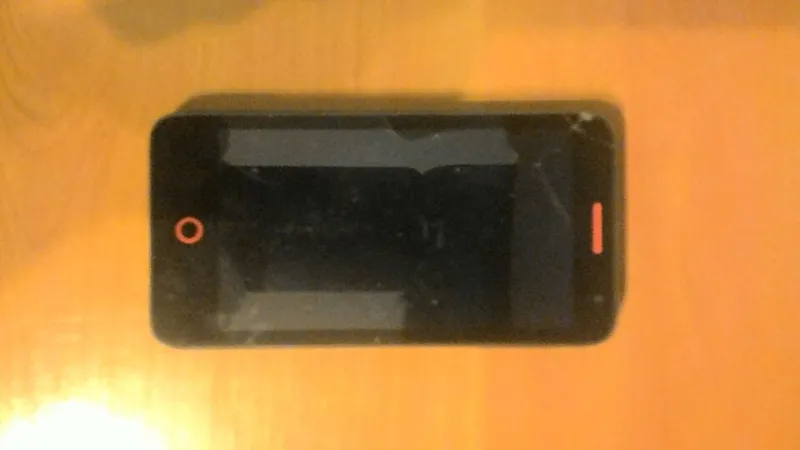
Photo: Airon90, CC BY-SA 3.0, via Wikimedia Commons
An eSIM is brilliant right up until the phone it lives on gives up. No plastic to pop out, no little tray to fish open with a paperclip, no SIM to move into the drawer’s emergency handset. For prepaid users, that convenience can suddenly feel like a trap: your number, your credit and your two-factor texts are all sitting in a device that won’t turn on.
The good news is that a dead handset doesn’t have to mean a dead number. The less good news is that rescuing a prepaid eSIM is not one uniform process. UK networks and MVNOs handle replacements differently, and the smoothest route is always the one you’ve checked before the crisis, not during it.
First, the bit that catches people out
An eSIM is not a SIM card in software clothing. It’s a profile downloaded onto a specific handset. If that handset is lost, stolen or bricked, the profile goes with it. You can’t usually prise it out and stick it into an old Nokia. The provider has to disable the old profile and issue a replacement eSIM for your new device.
That means the real question isn’t ‘where did my eSIM go?’ It’s ‘can I prove I’m me, access my account, and get the provider to issue a new profile quickly?’ Everything else is admin.
Pre-crisis checks worth doing this afternoon
You don’t need a disaster plan worthy of a bunker. You need a few boring details stored somewhere other than the phone that might die.
- Know your network account login and password. Not just the app login that’s saved on your handset. The actual username, password and any PIN.
- Add a backup email address and a backup phone number that don’t depend on the eSIM. If your bank sends codes to the number you’ve just lost, you’ll want another way in.
- Save your mobile number, account number and any eSIM reference details in a password manager or a paper note. The ICCID or activation email can help support staff find you faster.
- Check your provider’s eSIM replacement policy now. Search its help pages for ‘eSIM replacement’ or ‘SIM swap’, not just ‘activate eSIM’. Those are different jobs.
- Note your credit expiry date. A replacement eSIM should preserve your balance, but a long outage can still butt up against an expiry rule.
- Keep a cheap unlocked handset or a physical PAYG SIM as a fallback. It doesn’t need to be fancy; it needs to make calls and receive texts.
Screenshotting an eSIM QR code is not a reliable backup. Many activation codes are one-use or time-limited. Save the account access instead.
What actually happens when the phone dies
If the handset is lost or stolen, tell the network straight away. Ask it to block the eSIM and, where relevant, the handset’s IMEI. If it was stolen, get a crime reference number — some providers ask for it, and your insurer certainly will. Blocking the old profile matters because an eSIM can still be used by whoever has the device until the network kills it.
If the phone is simply broken, the same replacement process applies, minus the police report. Try the web account first if the app is on the dead phone. If you can’t get in, ring customer services from another phone and be ready to prove you’re the account holder.
The identity hurdle
Prepaid accounts are lighter on paperwork than contracts, but they aren’t anonymous. Networks may ask for your name, address, date of birth, account PIN, the last top-up amount, recent call patterns or a payment receipt. If the SIM was a gift and the account is in someone else’s name, you may need that person to do the talking.
This is why it’s worth updating your address and contact details when they change. A prepaid account that still lists your old flat from three moves ago is a rescue waiting to go sideways.
Provider routes in the UK
The big four — EE, O2, Vodafone and Three — and most MVNOs now support eSIM in some form, but replacement routes vary. Some let you self-serve through an app or web account. Some push you to a store for ID checks. Others rely on chat or phone support and may charge a replacement fee. Prepaid brands can be especially varied: one might issue a new QR code in minutes, another might post a physical SIM because that’s still its default process.
Don’t assume the person in the shop can fix it if you’re on an online-only MVNO. Equally, don’t assume an online-only provider is hopeless — many have decent web-based SIM swap tools. Check the specific help page for your brand before you need it.
Getting the new eSIM up and running
You’ll usually need a compatible, unlocked handset, a Wi-Fi connection and either a QR code or an in-app activation route. Follow the provider’s instructions exactly. Don’t delete the old eSIM unless support tells you to; if the old phone turns up later, a replaced profile won’t simply spring back to life.
If you’re borrowing a handset, check it supports your network’s bands and that it’s not locked to another provider. A rescue eSIM in a borrowed phone with no signal is just a different kind of dead end.
A simple backup plan that earns its keep
Write down your account access. Keep a spare unlocked handset or physical SIM. Make sure at least one important account — email, bank, password manager — can be recovered without relying on the mobile number. And keep the provider’s support number somewhere offline.
None of that is glamorous. But when your phone hits the floor and the screen goes black, you’ll be glad you spent ten minutes sorting it while everything still worked.
The bottom line
A prepaid eSIM is convenient, tidy and perfectly sensible. It is not a fireproof box for your number. Treat the account, not the handset, as the thing you’re protecting. Get your login details straight, understand your provider’s replacement route, and keep a fallback within reach. A dead phone is annoying. A dead number is a proper headache — and it’s usually avoidable.