Full Bars, Dead Data: The UK Prepaid Signal Test I Wish More Shoppers Ran

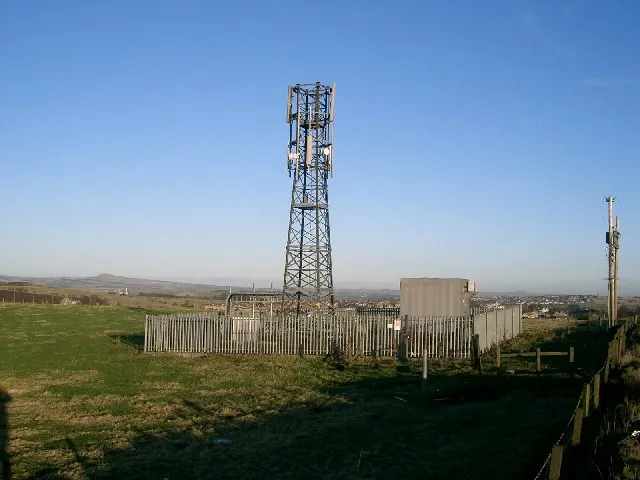
Photo: Frombowen, CC BY-SA 4.0, via Wikimedia Commons
There is a special kind of betrayal that only a mobile phone can deliver. You are standing on a busy high street, the screen shows four bars, and nothing loads. No map, no train ticket, no message to say you are running late. The coverage map said you were covered. The phone says you have signal. The internet says otherwise.
That gap between the map and reality is why prepaid SIM shopping needs a bit more street-level scepticism. A prepaid SIM is low-risk compared with a 24-month contract, but it is not risk-free if you pick a network that dies in your kitchen, your office or the one village where your parents live. Here is the test I would run before committing to any network or MVNO in 2026.
Why the official map and your phone disagree
Coverage maps are predictions, not recordings. They are built from computer models, drive tests and base station data. They generally assume a phone outdoors, held at roughly head height, with a handset that supports the right bands. Real life is messier. Thick walls, double glazing, basements, hills, trees and crowded streets all eat into the signal.
The bars on your phone are also a crude guide. They show signal strength, not capacity. A mast can be close enough to give you full bars and still be rammed at 6pm on a Friday. That is why you get the classic full-bars, no-data experience in train stations, shopping centres and football crowds.
Your phone matters too. A handset that lacks a network's main 4G or 5G bands may struggle even where the map looks strong. MVNOs add another layer: most run on one of the big four networks, but they do not all get the same access to 5G, Wi-Fi calling or VoLTE. Check the host network and the features included, not just the price per gigabyte.
The three-location test, plus the commute
Before you buy a 12-month SIM-only plan, buy a 30-day one if you can. Then test it in the places that actually matter. Not the car park outside the shop.
1. The busy high street at peak time
Go somewhere crowded on a Saturday afternoon. Try a speed test, load a map, send a photo and make a call. Do it at lunchtime or after work, not at 7am when the mast is bored. If data crawls while the bars are full, congestion is the issue. That is useful to know before you sign up.
2. The rural village or the edge of town
Visit the spot where you actually spend time: a relative's house, a weekend walking route, a village hall. Check calls, texts and data separately. A network can be fine for calls and useless for data, or the other way round. If you rely on your phone for directions or paying for parking, test those things, not just the signal icon.
3. The stubborn indoor spot
This is the one that breaks hearts. Try your home, your workplace, a supermarket basement, a gym changing room or a train station concourse. Walk from the window to the middle of the room. If signal vanishes indoors, ask whether Wi-Fi calling is included and whether your phone supports it. Wi-Fi calling is often the difference between a usable SIM and a decorative one.
4. The commute
If you travel by train, bus or car, test the route. Coverage maps rarely capture the dead spot between two towns or the bend in the road where the signal drops. A 30-day SIM is perfect for this: use it for a week of normal life and keep notes.
What to check before you buy
A quick pre-purchase checklist saves a lot of swearing later.
- Check the host network. Lebara, Smarty, Giffgaff, Tesco Mobile, 1pMobile and others ride on one of the big four. The logo on the SIM is not the same as the network doing the work.
- Check the features. Does the plan include 5G, Wi-Fi calling, VoLTE and roaming? A cheap SIM without Wi-Fi calling may be a false economy if your home is a signal black hole.
- Check your phone's bands. Look up the handset specs and compare them with the network's main 4G and 5G bands. This matters more with imported phones.
- Check the returns window. Some prepaid SIMs can be returned unused; some cannot. Read the terms before you peel the SIM out of the card.
- Check the real-world coverage tools. Ofcom's mobile coverage checker is a useful sanity check, but treat it as one source, not gospel. Network status pages can also show local faults.
The honest verdict
No network is best everywhere. Anyone who tells you otherwise either has not travelled much or is selling something. EE often wins on raw coverage, O2 and Vodafone have strong pockets, Three can be excellent for data in cities and patchier elsewhere, and MVNOs can be brilliant value if you accept their feature limits.
The smart prepaid move is to treat the first month as a test drive. Buy a 30-day SIM, run the three-location test, and only then decide whether to stay or port your number elsewhere. A coverage map is a menu. Your street is the meal. Check before you commit.