One Bar in the Kitchen: Putting a Prepaid SIM on Household Phone Duty
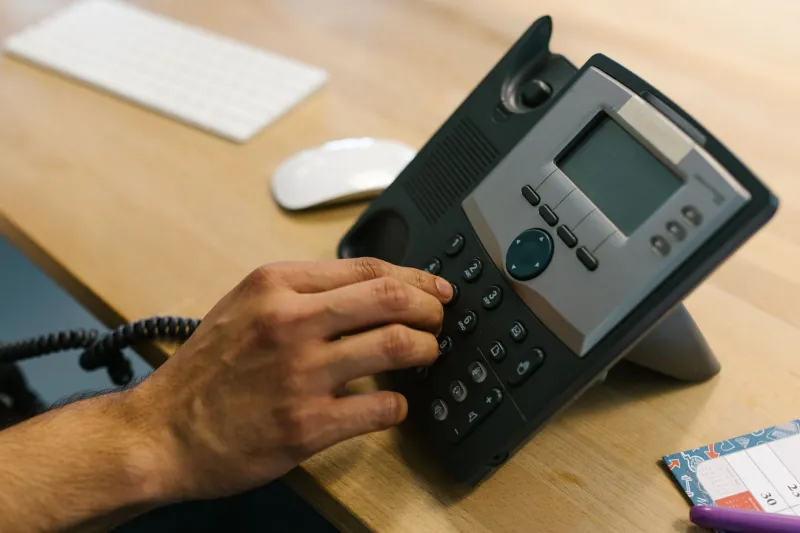
The hallway phone has had a good run. Forty-odd years of crackly calls, auntie ringing at 7pm on a Sunday, and that one cousin who still dials the number he learned in 1989. But with Openreach's old copper network being retired and everyone moved onto digital voice services that ride on your broadband, a lot of people are asking a very sensible question: do I even need a landline, or can a fiver-a-month prepaid SIM do the same job?
Short answer: often yes, sometimes no, and the gap between the two is entirely about your house, your walls and how many people share the number. Here's the honest version.
Why the hallway phone is living on borrowed time
Openreach has already stopped selling new traditional phone lines, and the remaining copper-based services are on the way out. Once that happens, your "landline" is really just a VoIP service running down your fibre — which means it needs a router, a power socket and a working broadband connection. A lot of people are discovering that keeping a landline alive costs them a tenner or more a month on top of broadband they're already paying for, and that's before anyone actually makes a call.
That's the gap a prepaid SIM walks into. Five to ten quid a month, no contract, no line rental, and a number that follows you round the house in your pocket.
Three ways to wire a SIM into the role of home phone
There isn't one setup, so pick the one that matches how your household actually behaves.
A basic handset in a dock. Cheapest by far. A sub-£40 handset with big buttons, a charging cradle in the kitchen, and a prepaid SIM inside. It's a mobile number, but nobody has to know — you just give it out as the house number.
A 4G or 5G home phone hub. These are little desktop units with a SIM slot and a proper handset, designed to behave exactly like a landline. Better speaker, better reception, usually a backup battery inside. Prices start around £40-60, plus the SIM.
A router or adapter with a SIM. Some 4G/5G routers will take an analogue phone adapter so your existing cordless set keeps working. Fiddlier to set up, but it means you don't have to re-teach anyone how to answer the phone.
The indoor coverage bit that nobody checks properly
This is where most SIM-as-landline plans quietly fall apart. Your mobile works fine because you're standing in the garden waving it at a mast. The kitchen — thick walls, a boiler, a fridge, a microwave — is a different postcode as far as radio waves are concerned.
Before you commit, do the boring test properly. Put a SIM on the network you're considering into an old handset, then walk round the house at the times you'd actually be making calls: 8am, 6pm, Sunday lunchtime. Check the kitchen, the back bedroom and wherever the current phone lives. Signal is a moving target — the bars that look fine at midnight can go to mush when the street's full of Netflix.
If it's patchy but your broadband is solid, Wi-Fi calling can paper over the cracks on a handset that supports it. Just be aware that Wi-Fi calling on prepaid isn't universal across every network and tariff, and it won't help a home phone hub that doesn't offer it.
What a power cut actually does
Here's the thing people remember too late. Old copper landlines were line-powered — the exchange kept them alive when the lights went out. Digital voice doesn't, which is why providers hand out battery backup units to people who need them. A mobile-based home phone doesn't either, but it has one advantage: your handset battery is good for a couple of days if you don't hammer it, and the local mast probably has some backup of its own.
Probably. Not definitely. Keep a charged power bank and a car charger in the drawer, and treat the mobile in your pocket as the real emergency line.
999 and the no-credit question
Emergency calls work from any UK mobile network, with or without credit, as long as there's a signal and a charged handset — that includes a prepaid SIM with a balance of precisely zero. What it doesn't include is a flat battery, a SIM that's been removed, or a handset that's locked and nobody remembers the PIN.
So the practical rule is: don't let the house phone become the only phone. If the household line is a prepaid SIM, keep the handset on a charger and do a test call to a normal number once a month to confirm it still earns its keep.
The shared number problem
This is the friction nobody warns you about, and it's the one that sinks most of these setups.
One SIM equals one number equals one device. That means the phone rings wherever the handset happens to be — in someone's coat pocket, on the hall table, down the side of the sofa. There's no picking up in the kitchen while someone else is on a call in the study. There's no "the kids can answer it". And when the person carrying it goes out, the household line goes out with them.
Call divert can help, but on prepaid it's often charged, and stacking divert onto a cheap tariff gets expensive quickly. If your household genuinely needs two or three handsets sharing one number, you're looking at a VoIP service rather than a SIM — worth knowing before you spend the money.
The slow leaks: voicemail and extras
Voicemail is where prepaid quietly charges you for other people's behaviour. Plenty of tariffs charge you to retrieve messages at your standard rate, and some charge to receive them in the first place. In a household context that matters more than it does on a personal phone, because people leave rambling messages on a house line that they'd never leave on a mobile.
Two fixes. First, check the voicemail charge on the specific tariff before you buy, not after. Second, set the ring delay long enough that people actually reach you, and consider switching voicemail off entirely if the household is happy to just try again later.
Porting the old landline number
Can you keep the number you've had since 1994? Usually, no — not on a SIM. Geographic landline numbers aren't ported onto mobile networks in the normal way. If keeping the old number genuinely matters, that's a VoIP job, and you'll be running it over broadband rather than a mobile network.
If you can let it go, do. A new mobile number is easier to explain to the handful of people who actually ring a house phone in 2026.
A two-week household trial before you cancel anything
- Buy a cheap prepaid SIM on the network with the best local coverage and top it up with a tenner.
- Live with it in a handset for two weeks — real calls, real times of day, real rooms.
- Note every dropped call, dead spot and "sorry, I didn't hear it ring".
- Check your voicemail charges on the actual bill.
- Only then cancel the landline, and keep the old number live for a month as a safety net.
The verdict
For a single-person household or a couple who mostly use mobiles anyway, a prepaid SIM in a decent handset or a 4G home phone hub is a genuinely good swap. It's cheap, it's contract-free and it does the one job the hallway phone ever did.
For a busy family sharing one number across three floors, it's a compromise you'll feel every week. Not a bad compromise — but go in with your eyes open, test the signal properly, and don't cancel the old line until you've proved the new one actually rings when someone calls it.